Photographs captured primarily at dusk—a time when shadows lengthen, colours are transformed by the fading light, and a sense of mystery pervades the scene. Vintage gelatin silver prints of a snowbound Russia in the early nineties, alongside recent digital colour prints of Aubrac and Japan.
ENTRE CHIEN ET FLOU As the title suggests, the photographs in this exhibition were captured primarily at dusk—a time when shadows lengthen, colours are transformed by the fading light, and a sense of mystery pervades the scene. The blur is not an aesthetic choice but a natural corollary of the photographer’s way of working. As he walks along, images come to him obliquely, much like memories glimpsed in a dream. Sharpness is not what interests him — he is in motion when pressing the shutter, whence the resulting blur. The colours proliferate, creating a third dimension in the landscape.The exhibition features the artist’s vintage gelatin silver prints from the early nineties, made while wandering aimlessly through a snowbound Russia that had itself lost its bearings after perestroïka, alongside his recent digital colour prints (2018-2025) set in the familiar surroundings of Aubrac and, at the other extreme, Japan.
DANIEL ANIZON Born in Nantes and based between Paris and Aubrac, Daniel Anizon is a photographer-author with an unconventional background. After completing a PhD in Economics in 1973, he spent three years travelling the world alone without a camera—a foundational experience recounted in his 2021 memoir Sans raison ni maison. He first took up photography in 1982, and his artistic vision was further shaped by his discovery of Japan in 2018. His career is marked by prestigious distinctions, notably the Prix Ilford (1984), the Prix Médicis Hors les Murs (1987) for his work on Canadian trappers, and the Prix News at the Rencontres d’Arles (1988). He has held international residencies in Canada and the United States, and celebrated 40 years of photography with a presentation at Gens d’images/ADAGP in Paris in 2024. His works are featured in major public collections, including the Musée d’Art Moderne de la Ville de Paris and the Bibliothèque Nationale de France. Still active today, he recently exhibited at the Maison Heinrich Heine in Paris (2021) as well as at the Galerie Mind’s Eye in 2026.
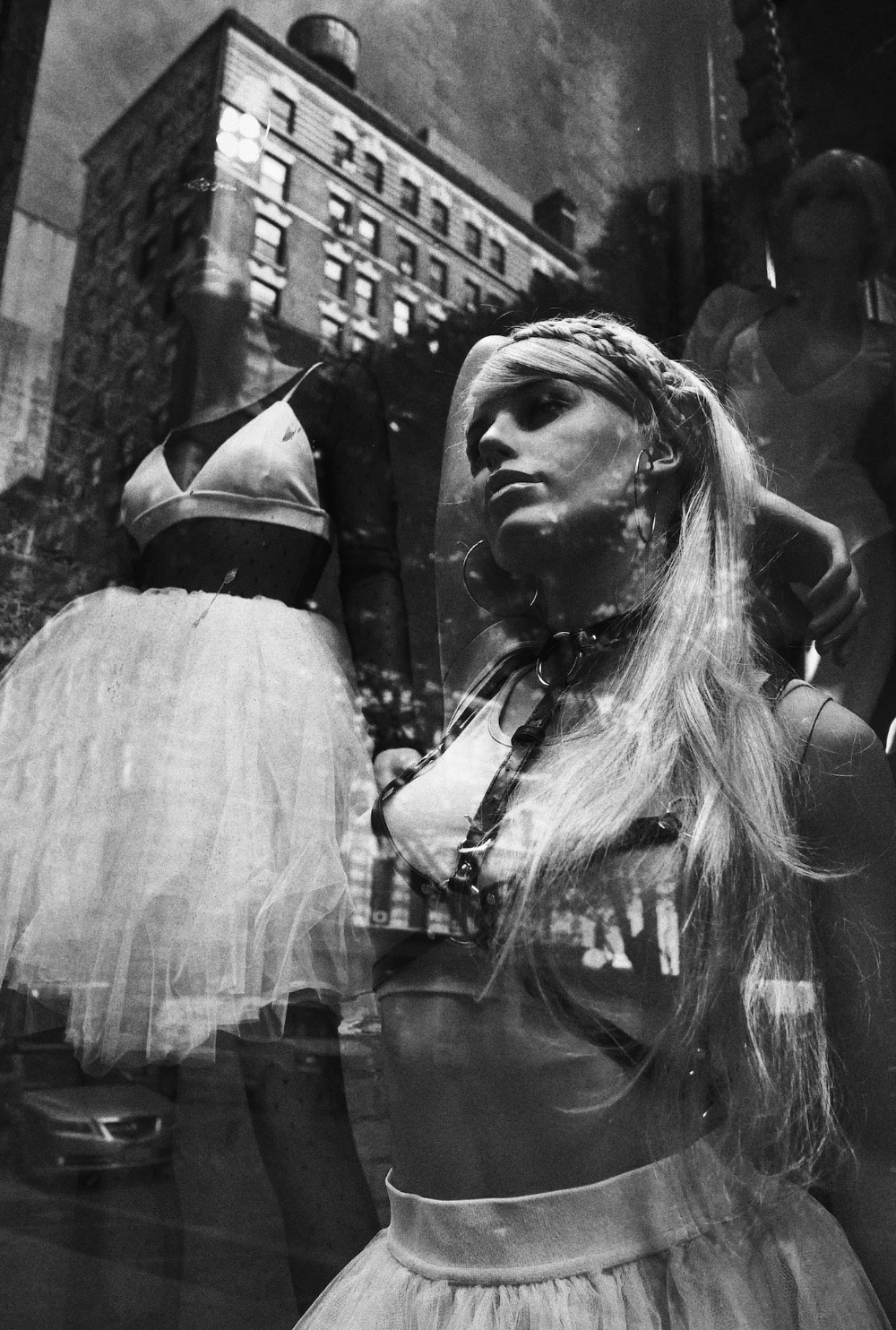
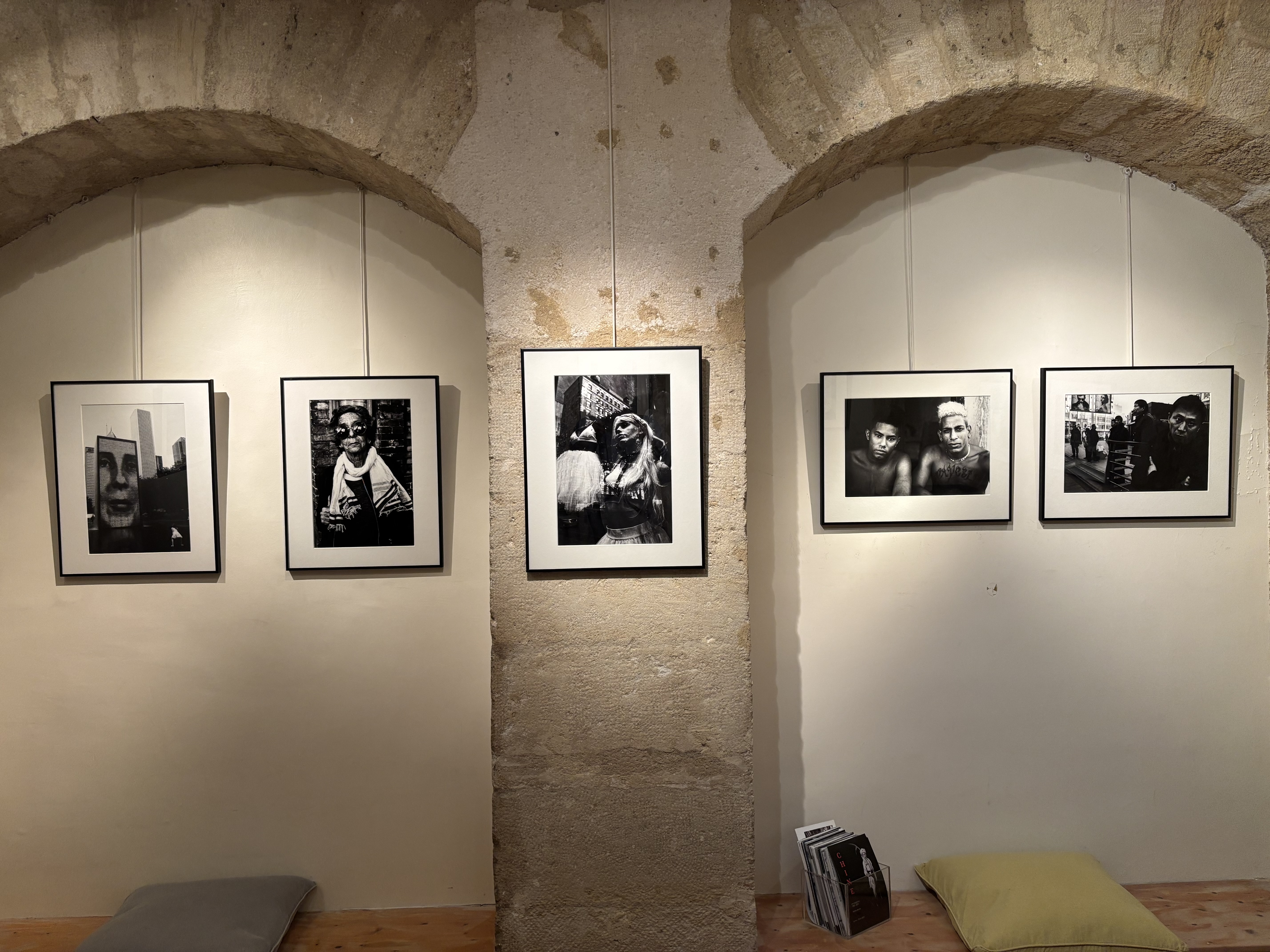
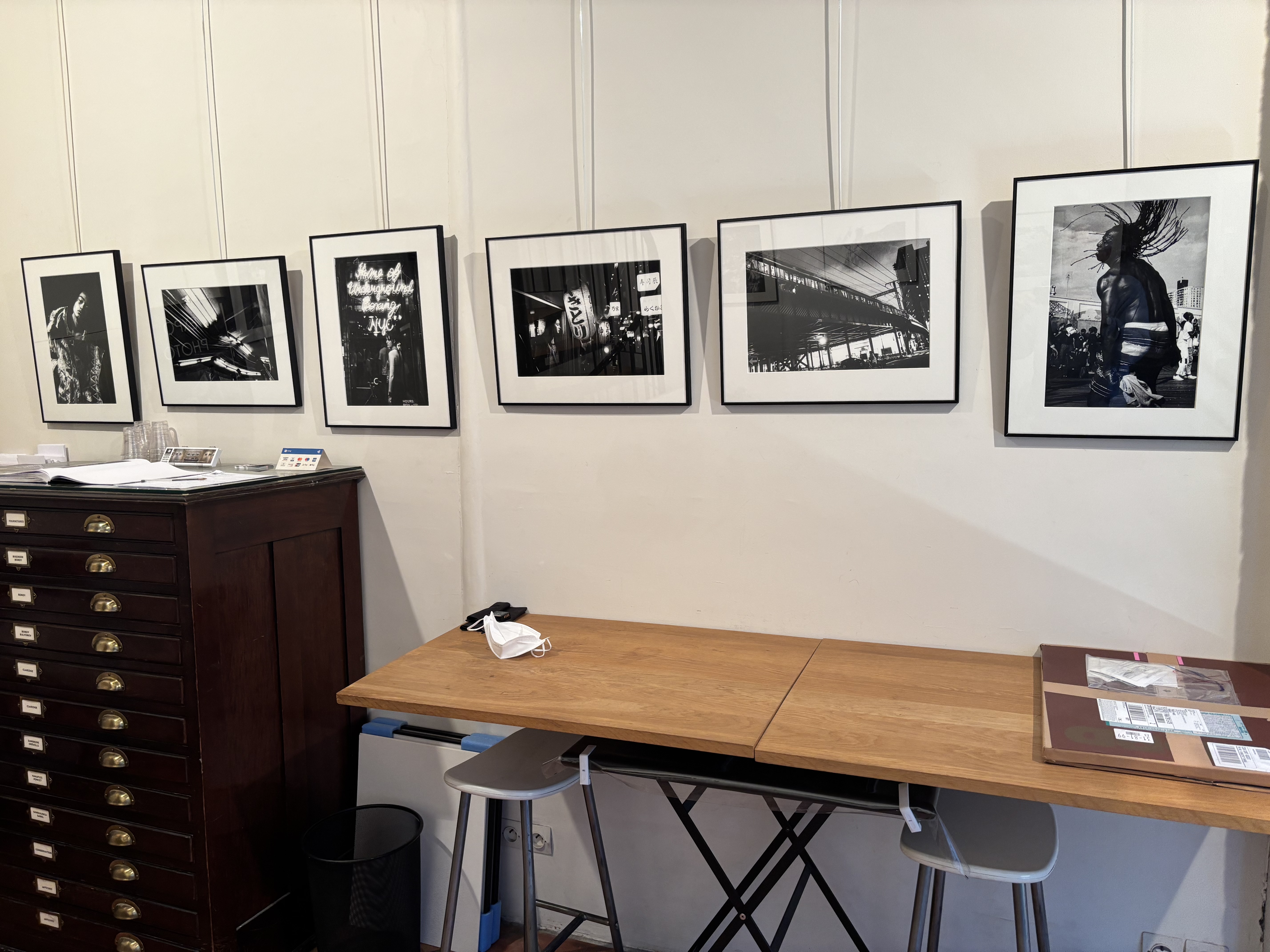
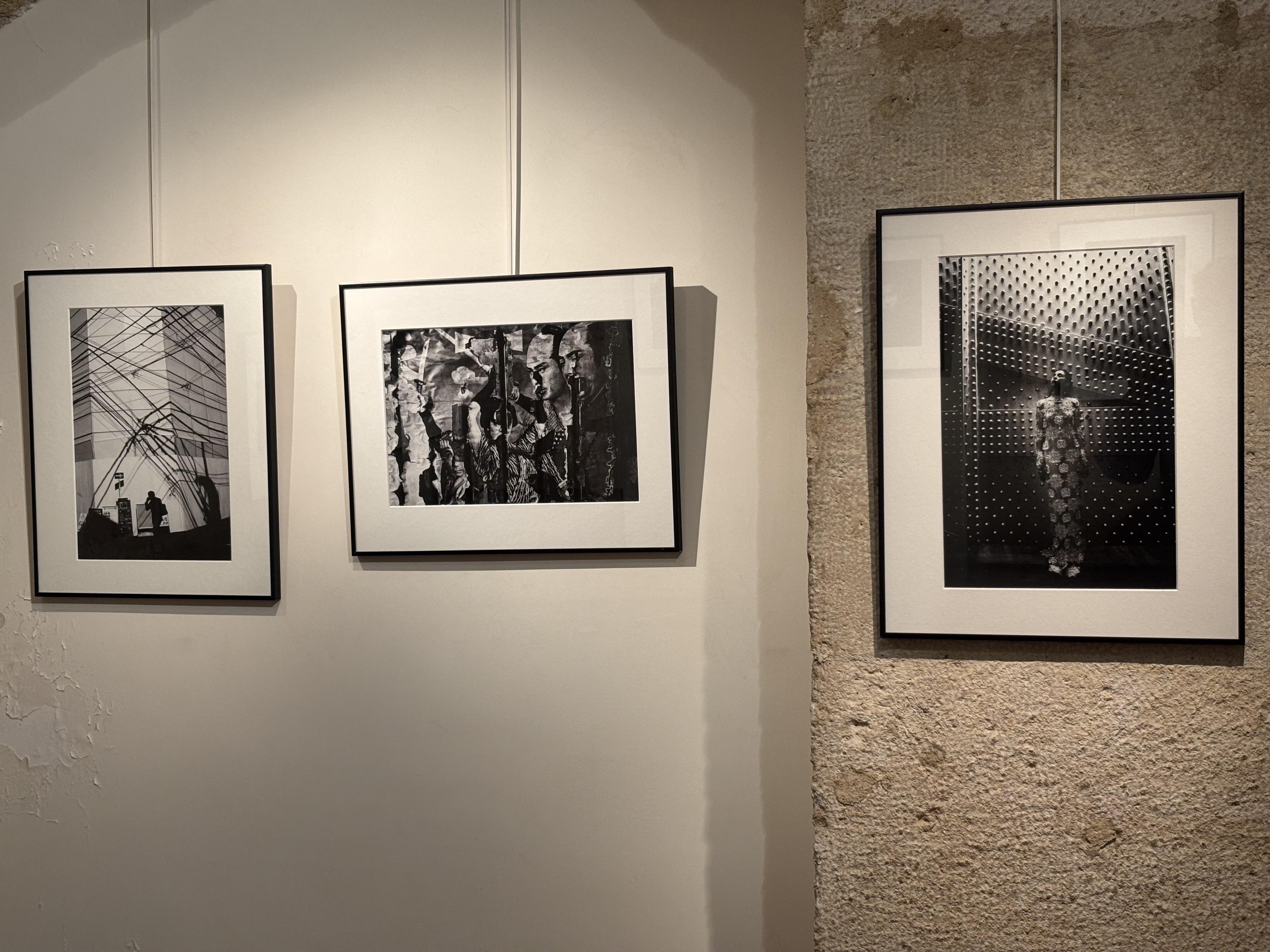
This is an exhibition of vintage silver prints by Takehiko Nakafuji, many of which were featured in his 2013 exhibition at Mind’s Eye, Enter the Mirror. The press release for that exhibition includes texts by Daido Moriyama, Mark Pearson and Takehiko Nakafuji.
Born in Tokyo in 1970, Takehiko Nakafuji graduated from the Photography Department of Tokyo Visual Arts College. In addition to his work as a photographer, he is the owner of Gallery Niépce in Yotsuya, Tokyo. He has published ten books on street photography, predominantly in black and white, and travels extensively for photo assignments, including to Russia, Cuba, China, Hong Kong, Paris, New York, and Eastern Europe. He has held numerous solo and group exhibitions both in Japan and overseas. His work is held in three Japanese museums, the Kiyosato Museum of Photo Art, the Tokyo Photographic Art Museum, and the Shunan City Museum of Art and History in Yamaguchi.
In view of the success of Takehiko Nakafuji’s current exhibition, Down on the Street, we have decided to extend it until the end of the year and to follow it with a hanging of his vintage silver prints, many of which we showed in his 2013 Mind’s Eye exhibition Enter the Mirror.
Please note that, except for the opening party of this new exhibition on Thursday, January 8, 2026, all visits will be by appointment – a simple call or text message to 06 85 93 41 92 is all that is needed. We hope to see many of our regular visitors as well as a journalist or two, among others.
Born in Tokyo in 1970, Takehiko Nakafuji graduated from the Photography Department of Tokyo Visual Arts College. In addition to his work as a photographer, he is the owner of Gallery Niépce in Yotsuya, Tokyo. He has published ten books on street photography, predominantly in black and white, and travels extensively for photo assignments, including to Russia, Cuba, China, Hong Kong, Paris, New York, and Eastern Europe. He has held numerous solo and group exhibitions both in Japan and overseas. His work is held in three Japanese museums, the Kiyosato Museum of Photo Art, the Tokyo Photographic Art Museum, and the Shunan City Museum of Art and History in Yamaguchi.
The exhibition Down on the Street has just opened. Photographer Takehiko Nakafuji will be in Paris from November 5 to 17 and will attend the opening reception on Thursday, November 13. A few copies of his book Down on the Street will be available at the gallery. If you would like to meet Takehiko Nakafuji at some other time, please contact the gallery.
These images were made over the course of five academic visits to China spanning thirty-five years, although the majority date from the eighties. They reflect implicitly, and sometimes explicitly, the immense changes in Chinese society over this period. In 1983, one could not go anywhere unless accompaned by a guide or official. Communication in English was rather difficult. Every other day, one was taken on visits to factories and their day-care facilities, to spacious parks, to sites such as the Great Wall, Tienanmen Square, the Forbidden City, the Winter Palace. Beijing boasted wide streets but only the rare, official car to take advantage of them. Bicycles dominated, long, wide streams of them, a chorus of dingling bells. People lived in close proximity, either in small compact neighbourhoods, constantly surveyed, or in narrow alleys (hutongs). Mugs of tea, topped up every so often, were ubiquitous at meetings, conference talks, factory visits. As an invited guest, one travelled in comfort, generally by train or chauffeured car. At restaurants, even at breakfast, one was seated in a separate room from one’s guide or driver, a room reserved for foreigners and dignitaries.
Changes were already clearly visible in 1989. For instance, a Nanjing hutong I had visited in 1983 had been demolished and a new housing complex was under construction. By 2010, apartment blocks, frequently unsold and unoccupied, were shooting up everywhere like mushrooms, heralding the construction crisis of 2021. In Shanghai, a newly constructed railway station, with its gigantic hall and long line of security gates, resembled an airport terminal. It took the best part of an hour to travel by coach on the spaghetti of elevated freeways from the main campus of East China Normal University to its new satellite campus, also in Shanghai. (In 1989, I had cycled with ease, in the company of a group of foreign teachers, the 7km or so from the campus to the Shanghai Yue Opera House.) In 2017, the island resort of Sanya boasted spectacular tower blocks, sandy beaches, Chinese and Russian millionaires, and a 108 metre-tall bronze statue of the buddhist goddess of mercy Guanyin, erected on an artificial island.
Nanjing, 1983Fuzhou, 1989
ADRIAN BONDY
Born in London, Adrian Bondy moved to Canada in 1968 to take up a university post in mathematics. During his years of teaching and research, he pursued his passion for photography and took part in annual competitions organised by art museums, as well as the Ilford International Black and White Competition. He held several exhibitions, including one at the Kitchener-Waterloo Art Gallery.
In 1994 he was appointed to a post at Lyon 1. Since retiring in 2009, he has devoted most of his time to photography. In 2010, he founded the non-profit organisation Mind’s Eye, which aims to explore conceptual links between mathematics and photography. In collaboration with Roland Assous, he is producing a series of booklets on various mathematical themes, linking these themes to photographs. The first two issues, on Numbers and Photography, and Sets and Photography, were published by Mind’s Eye in 2018 and 2019. In 2012, he opened the Mind’s Eye gallery, dedicated to photography. In addition to running the gallery, he has shown his own work in solo exhibitions at the Niépce Gallery in Tokyo and at Mind’s Eye. More recently, during annual visits to Cuba, notably to the city of Camagüey, his work focused on the daily lives of Cubans. In 2019, at the Larios gallery in Camagüey, he presented the exhibition Cafés de Paris, an expanded version of which was held at Mind’s Eye in 2022. Other themes explored include The English, Venice, Blowups and Evictions, all subjects of self-published books.
The word photography literally means “drawing with light”. It was coined in 1839 by one of the pioneers of the field, the scientist Sir John Herschel.The term is of course best understood in the context of black and white photography, where the image is formed and perceived through the interplay of light and shadow, along with the infinitely many intermediate shades of grey.
Roseanne Lynch pursues this literal interpretation of photography by studying the play of light on objects, either existing ones (a Bauhaus staircase, the Kandinskys’ bathtub) or, more frequently, abstract ones created from paper, sheet metal, or photographic film, by folding, bending, curling or deforming in some other way. She invites the viewer to contemplate light in its purest form, how it impinges on, is reflected by, and brings to life these essentially abstract forms, some of which seem to hover in space like mysterious unidentified flying objects. Her fascination with light brings to mind the Japanese photographer Hiroshi Sugimoto and his movie theatres or seascapes. They have in common a certain surrealistic element induced by the magical effect of light.
The approaches she favours, photograms, luminograms and solarisation, are classical techniques. Photograms date from the early days of photography, but were later employed in more abstract, experimental ways by surrealist artists such as László and Lucia Moholy-Nagy. Another artist known for his photograms was Man Ray who, together with Lee Miller, developed the technique of solarisation. Most of the works in the current exhibition are unique silver prints. Occasionally, her prints of geometric forms are enhanced using graphite.
ROSEANNE LYNCH
Born in Dublin, Roseanne Lynch lives and works in Cork, Ireland. She studied Photography at Napier University in Edinburgh, Scotland, and obtained a Masters in Fine Art at Crawford College of Art & Design in Cork. Before her current post there as Lecturer in Fine Art, she was Lecturer at the Cork Centre for Architectural Education. Her passion for architecture informs her photographic work, for instance in her research on the geometric forms Frank Lloyd Wright used in his design for a Pavilion in Banff, Canada.
She has held a number of residencies, including at the Banff Centre for Arts and Creativity, Alberta, Canada, the Bauhaus Foundation, Dessau, Germany, the Camargo Foundation International Fellowship Programme, Cassis, France, the Cork Centre for Architectural Education, and the Centre Culturel Irlandais, Paris. In 2023, following her residency at The Bauhaus Foundation, and in response to the teachings of the Vorkus (preliminary course) at the Bauhaus school, she produced a book of her work, entitled Grammar, with a text by Bauhaus curator Torsten Blume.
Recent solo exhibitions include No Want of Evidence, Photo Museum Ireland, curated by Pádraig Spillane (2023), Semblance, Lavit Gallery, Cork (2022), GRAMMAR, Techne Sphere, Leipzig (2021), Forgetting’s Trace, Irish Embassy, Berlin (2020), and La trace de l’oubli, Centre Culturel Irlandais, Paris (2019).
Her work is held in several institutions, among them the National Collection of Ireland, the Arts Council of Ireland Collection, the Bauhaus Foundation, Dessau, the UCC Art Collection, the Glucksman Gallery, Cork, and the Office of Public Works State Art Collection, as well as in significant national and international private collections.



 Le Bès, été 2019 © Daniel Anizon
 Norilsk, 1995, Lénine © Daniel Anizon
 Peyrebesse, hiver 2020 © Daniel Anizon
 Le Bès, été 2019 © Daniel Anizon
 Yanaka, 2023 © Daniel Anizon
 Japan 2025 © Daniel Anizon
 Norilsk 1995 © Daniel Anizon
 Aubrac 2018 © Daniel Anizon


 © Takehiko Nakafuji